
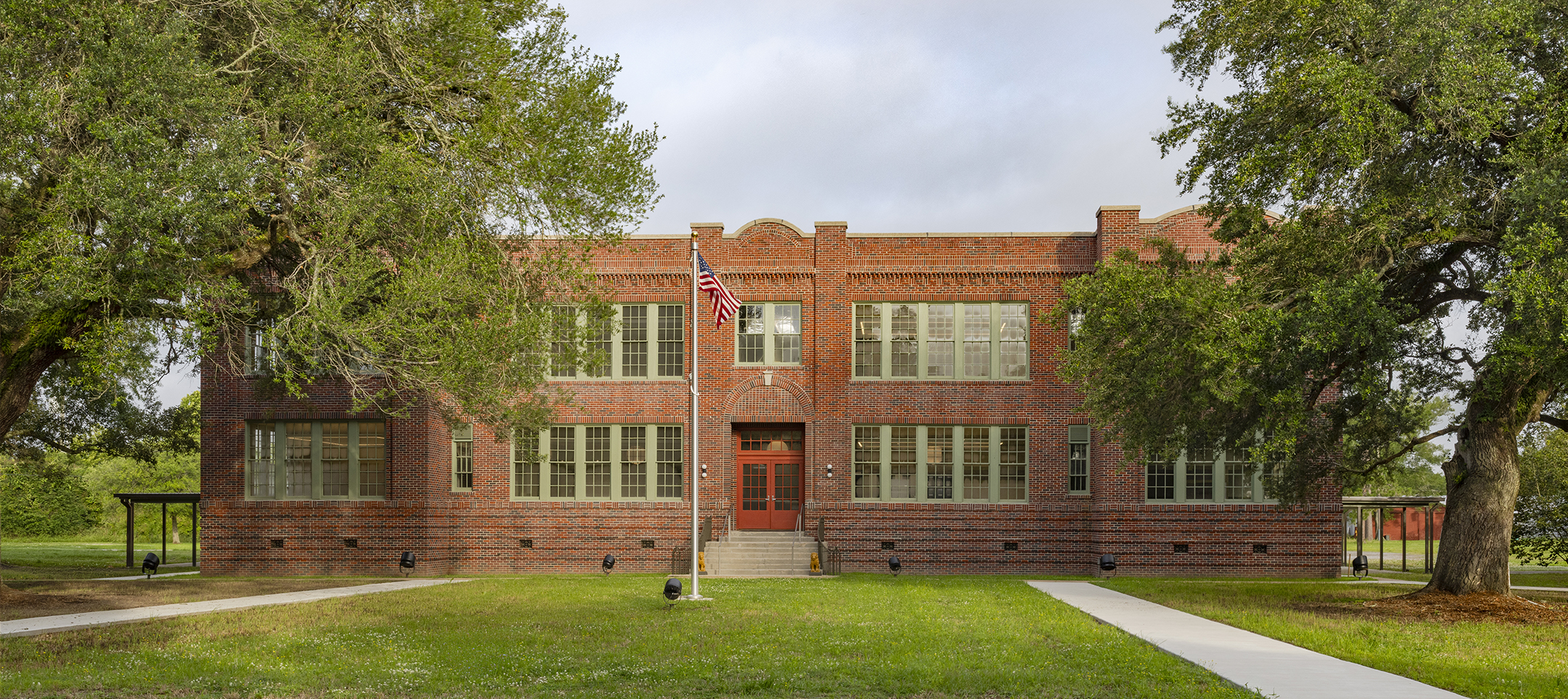
Ecole Saint-Landry Main Campus
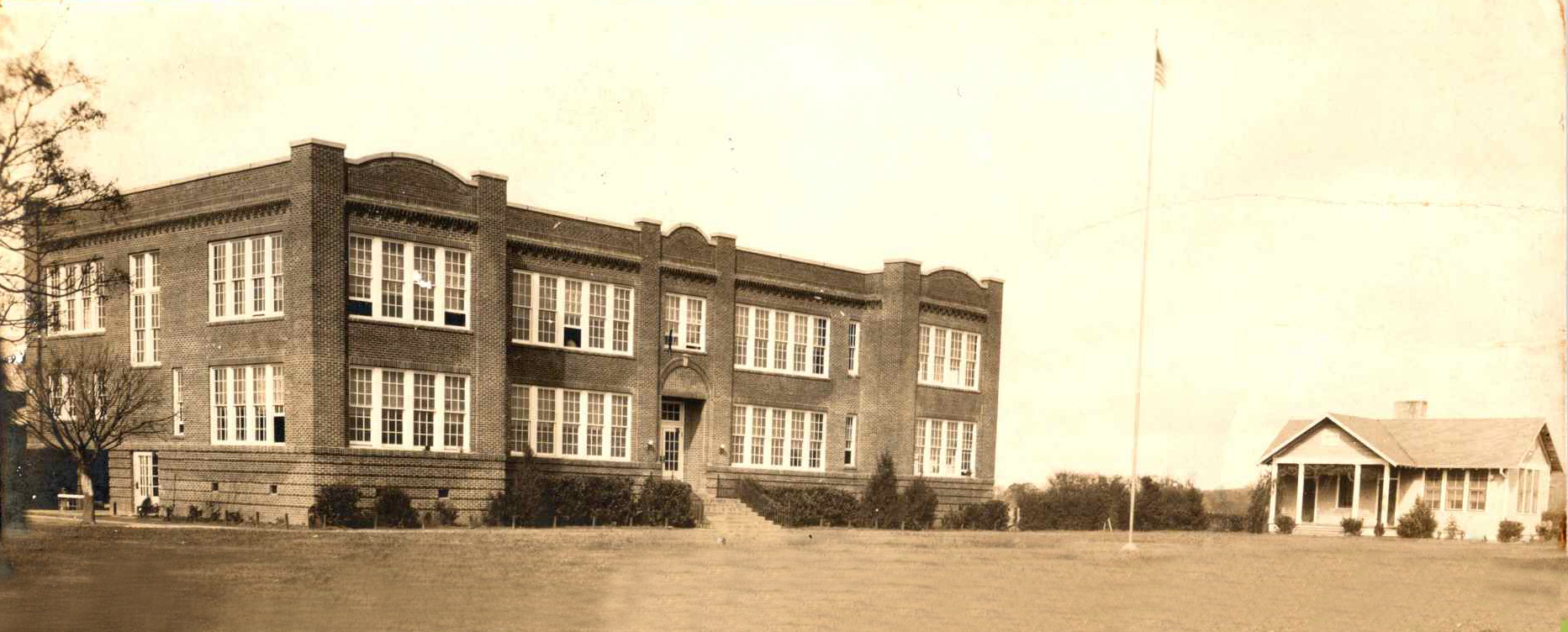
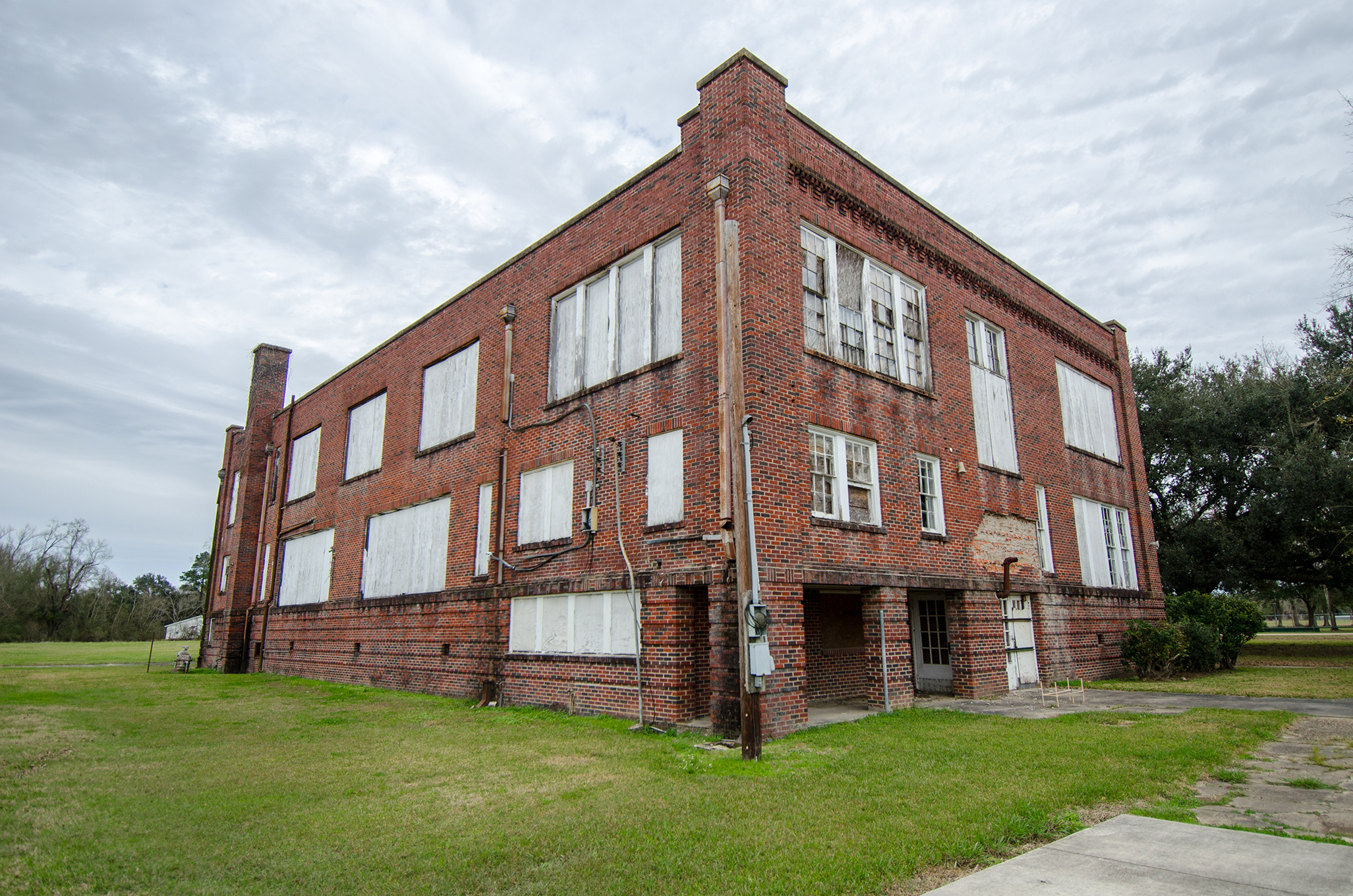
Originally constructed in 1926 by Alexandria, LA architect Herman J. Duncan, this building served the community for decades as Sunset High School before closing in 1991. Left vacant for over three decades, the historic structure, which is on the National Register of Historic Places, was rehabilitated to become École Saint-Landry, a French immersion charter school serving Saint Landry Parish. The building is a textbook example of 1920s institutional architecture—a two-story center-hall plan book-ended by a stair at each side and two mezzanine levels that introduce a quiet split-level character unique to the building’s section.
Project Text Coming Soon
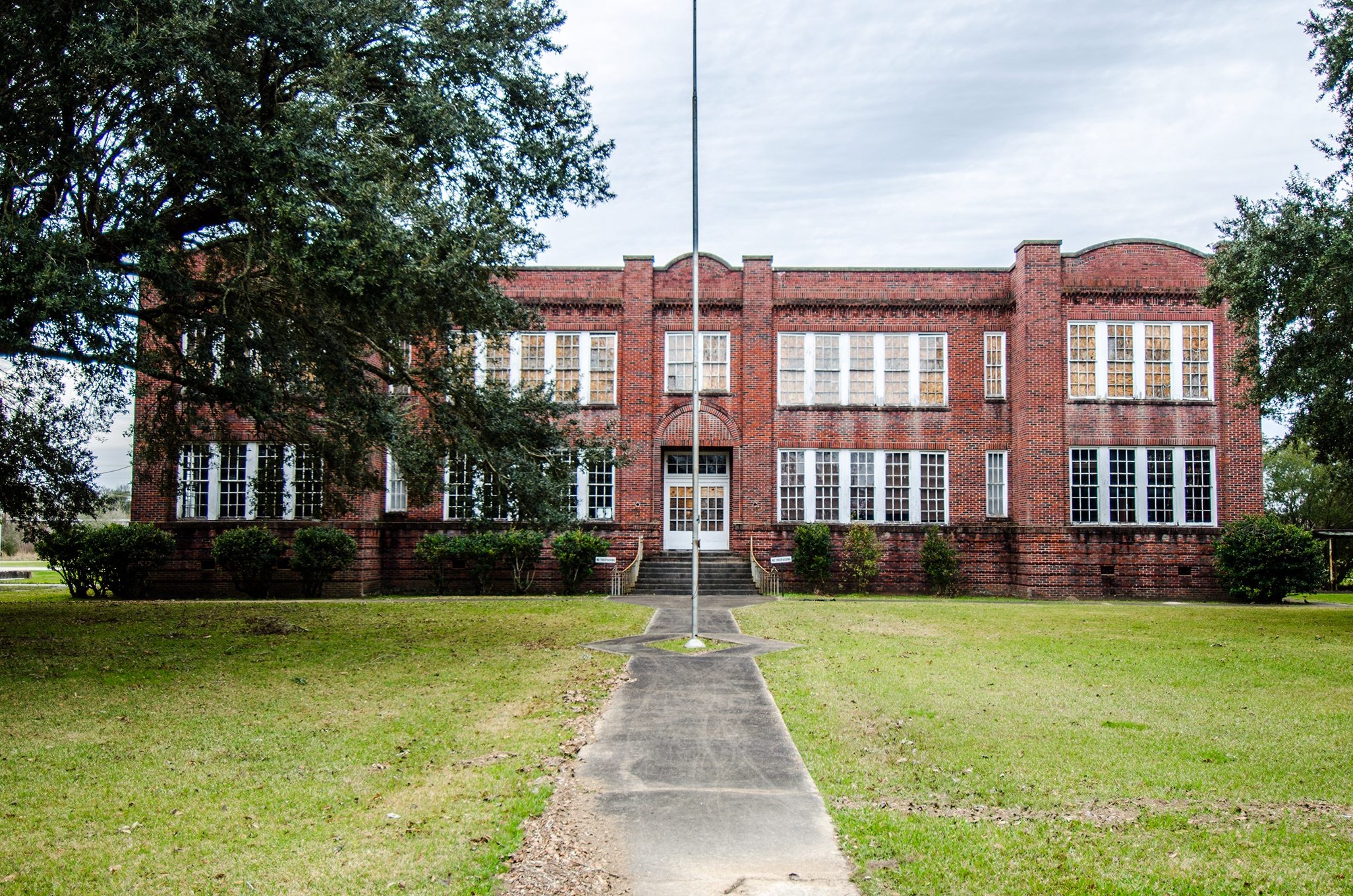
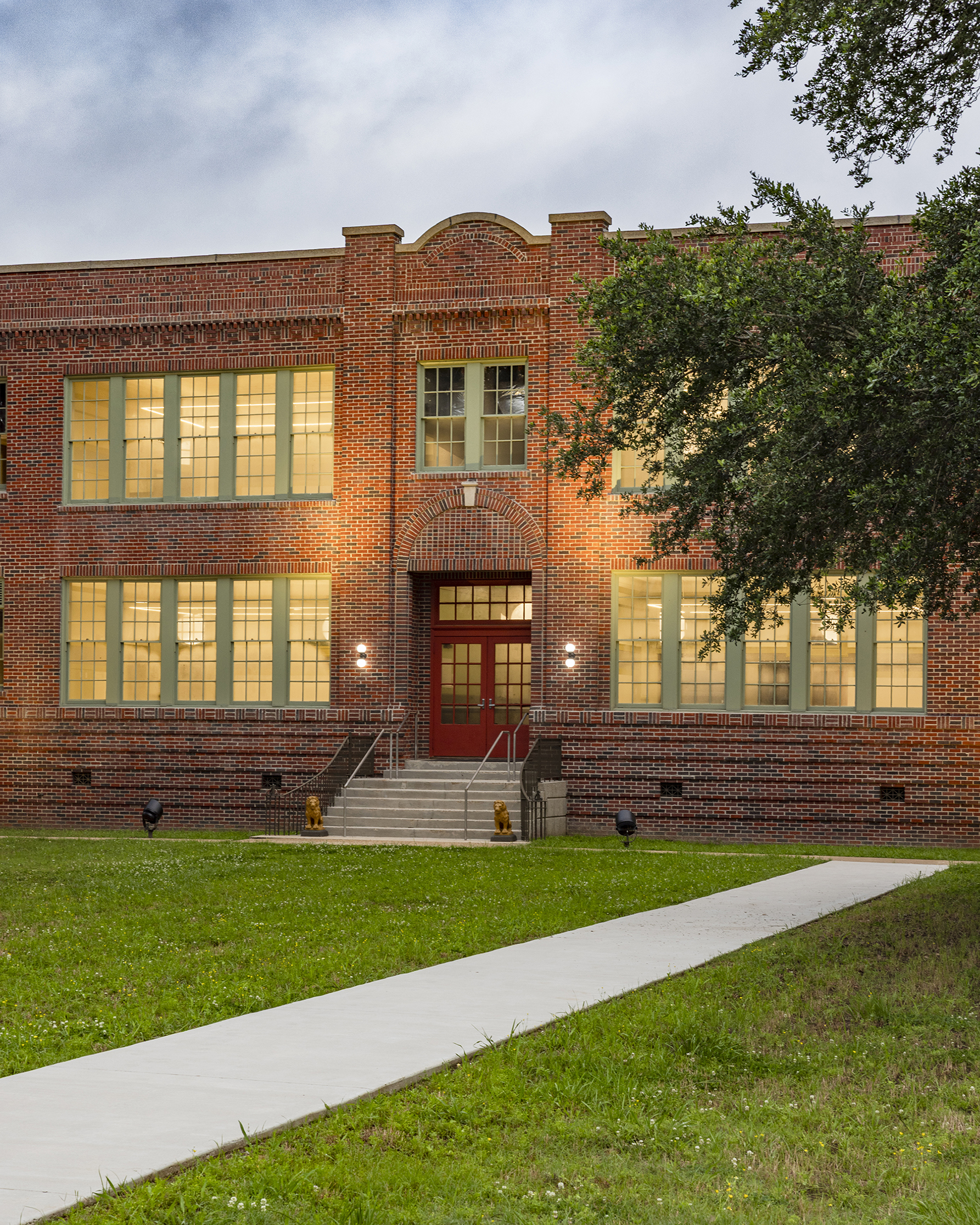
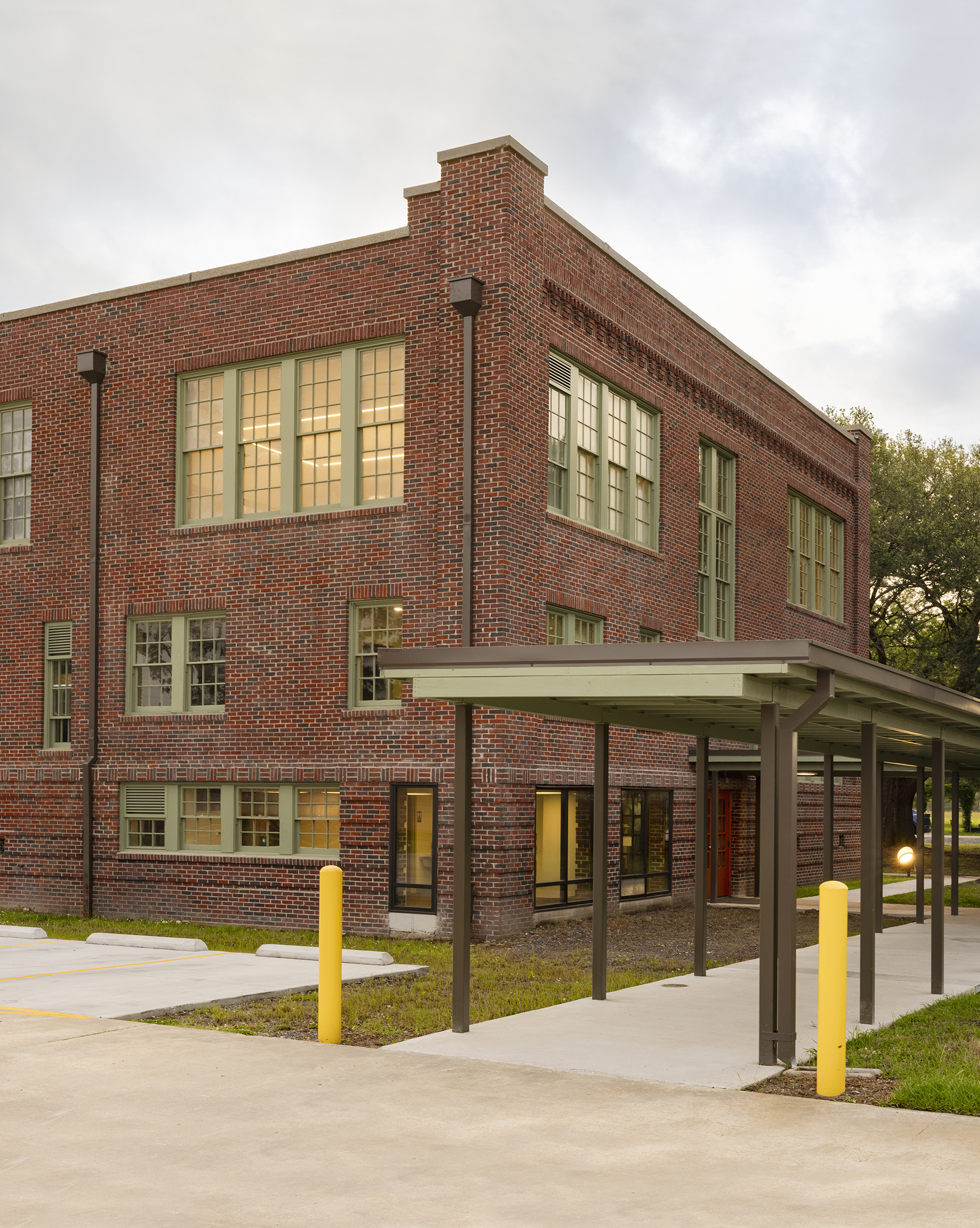
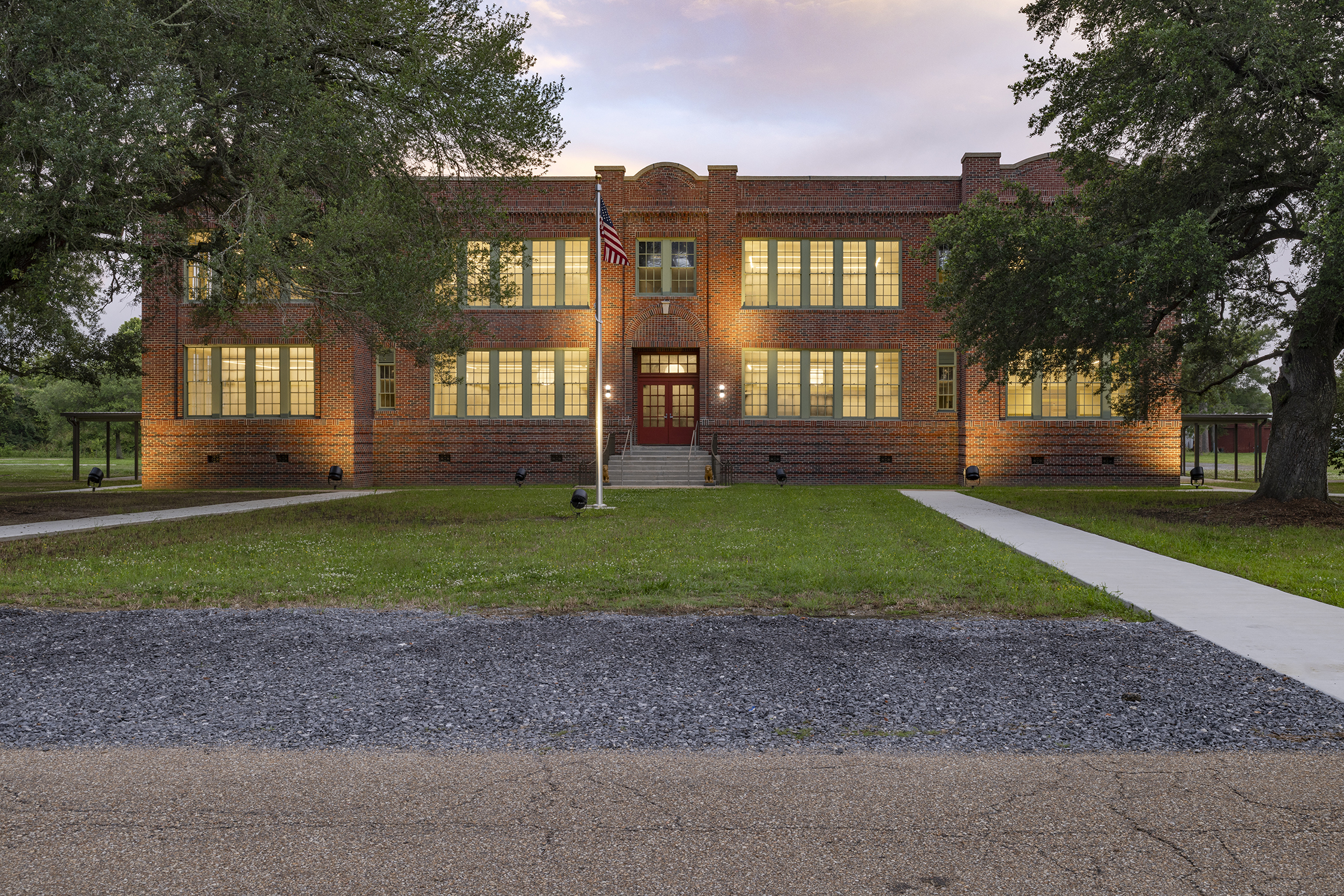
A new canopy was reinstated along the sides of the building to shelter students arriving by school bus or car. This design is modeled on the original mid-century canopy. At night, the front facade is laminated, restoring the building’s civic presence on the streetscape.
The original ground-floor loggia, situated beneath the mezzanine, was enclosed to expand the interior footprint, creating a dedicated space for art and music. The colonnade was carefully infilled with modern storefront glazing—transparent enough to preserve the rhythm of the original arcade while meeting contemporary needs. Across the building, all windows were reglazed, with nearly half the panes replaced; several windows on the rear elevation, damaged by fire, were fully refabricated to match the originals.
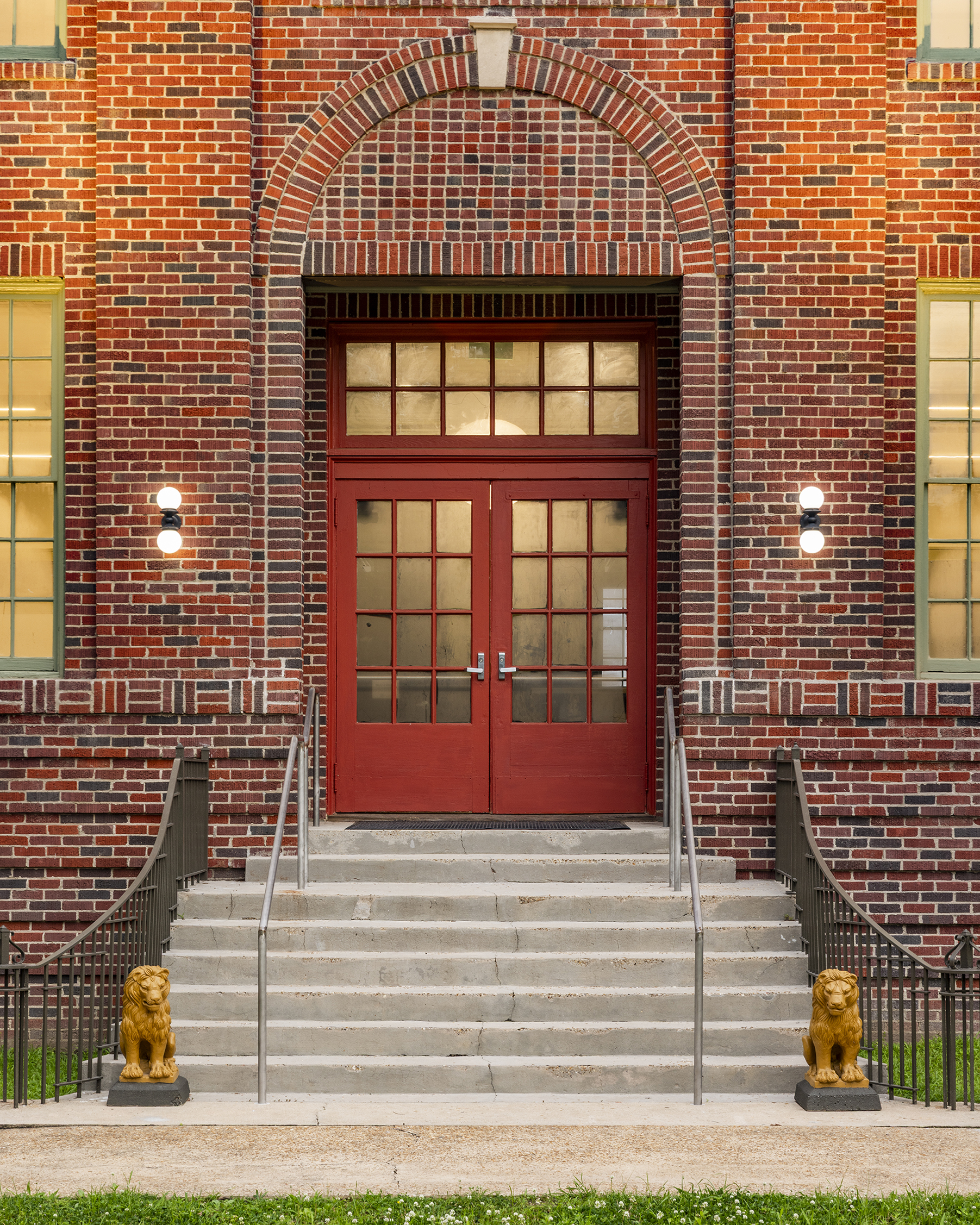
The original entry door was restored, fitted with new hardware, and a painted red to signal a welcoming threshold. Period-appropriate light exterior sconces were used based on photographs from the 1920s. New code-compliant handrails were introduced alongside the restored original guardrails, and all exterior brick was cleaned, repointed, and sealed.
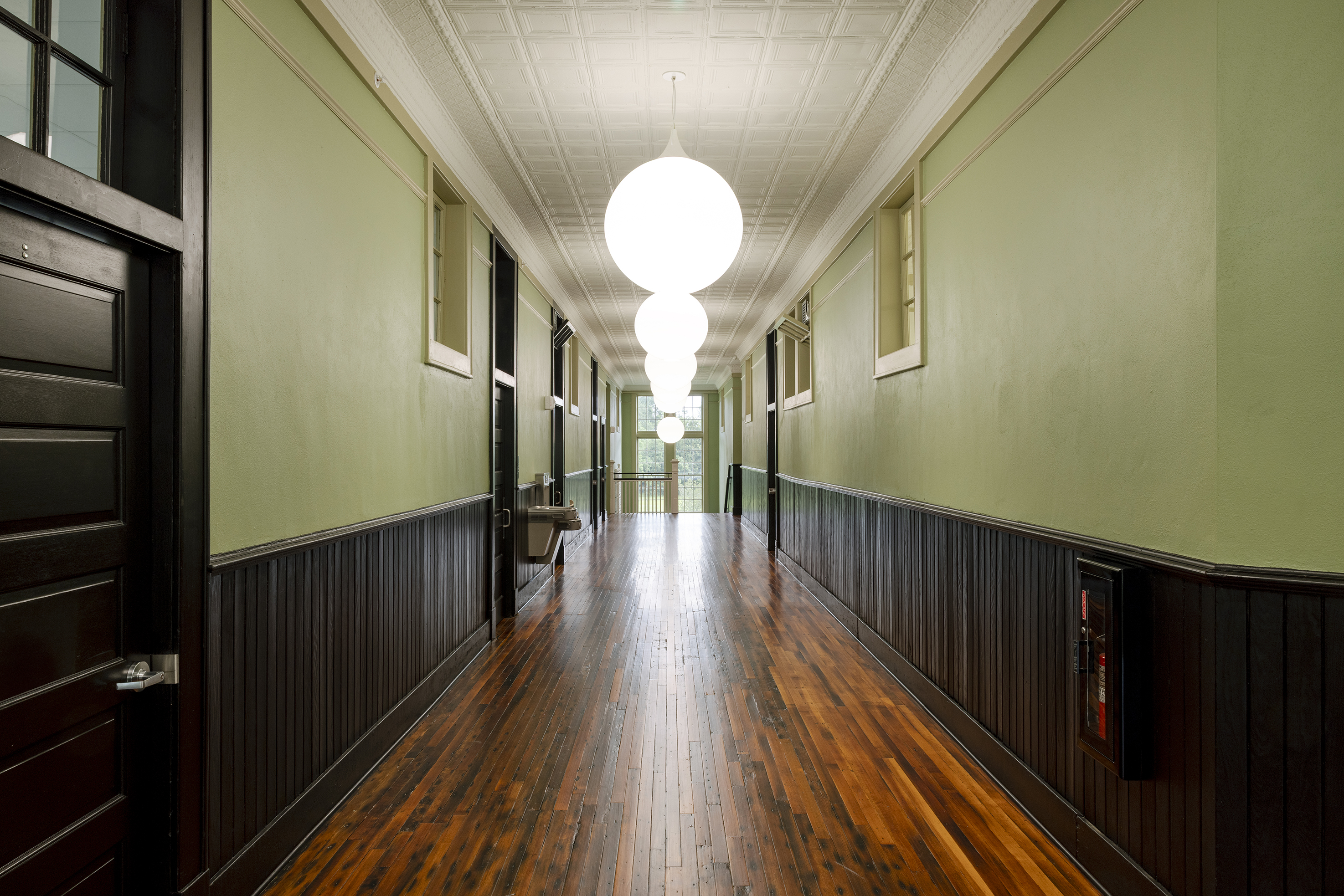
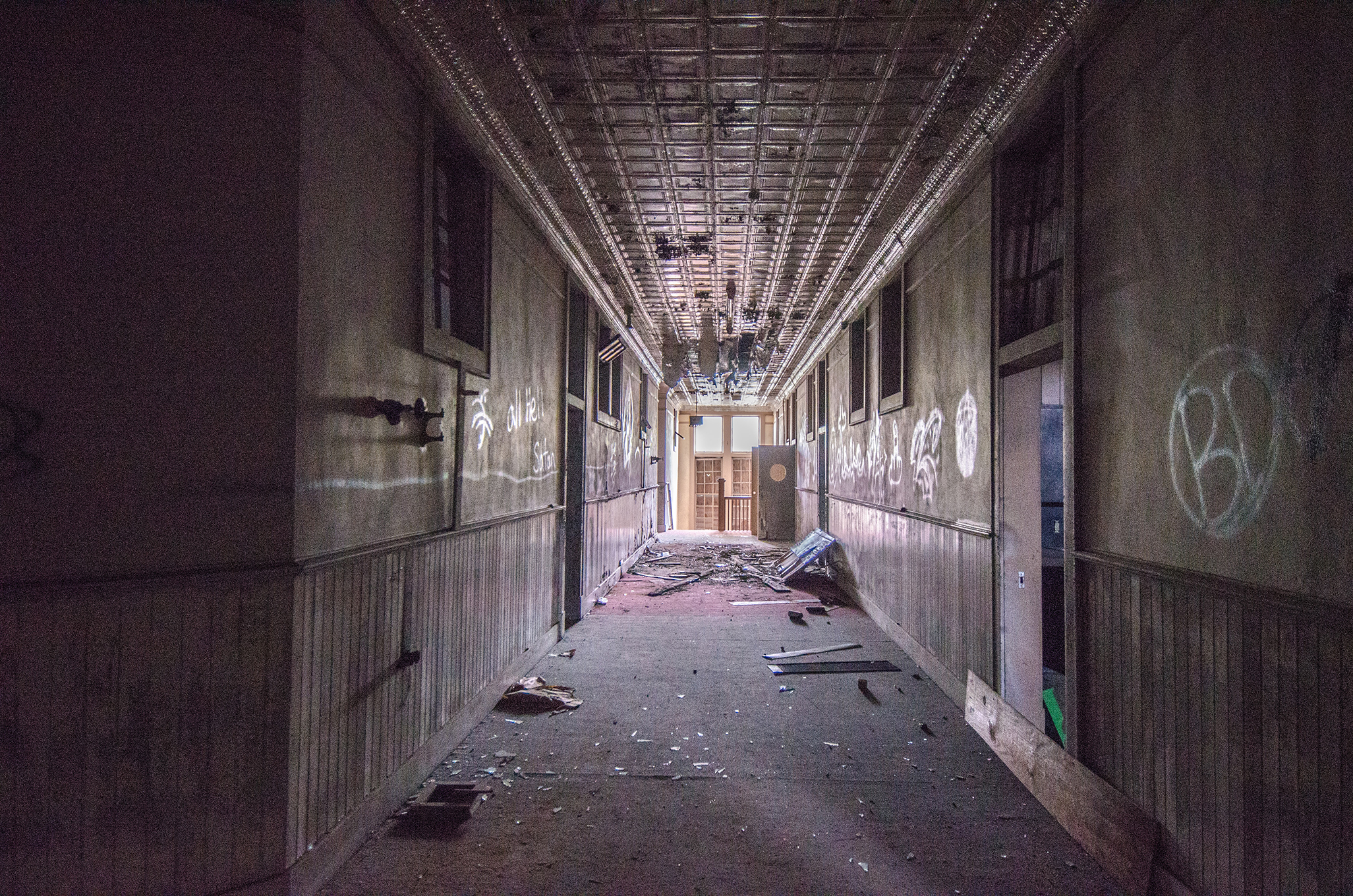
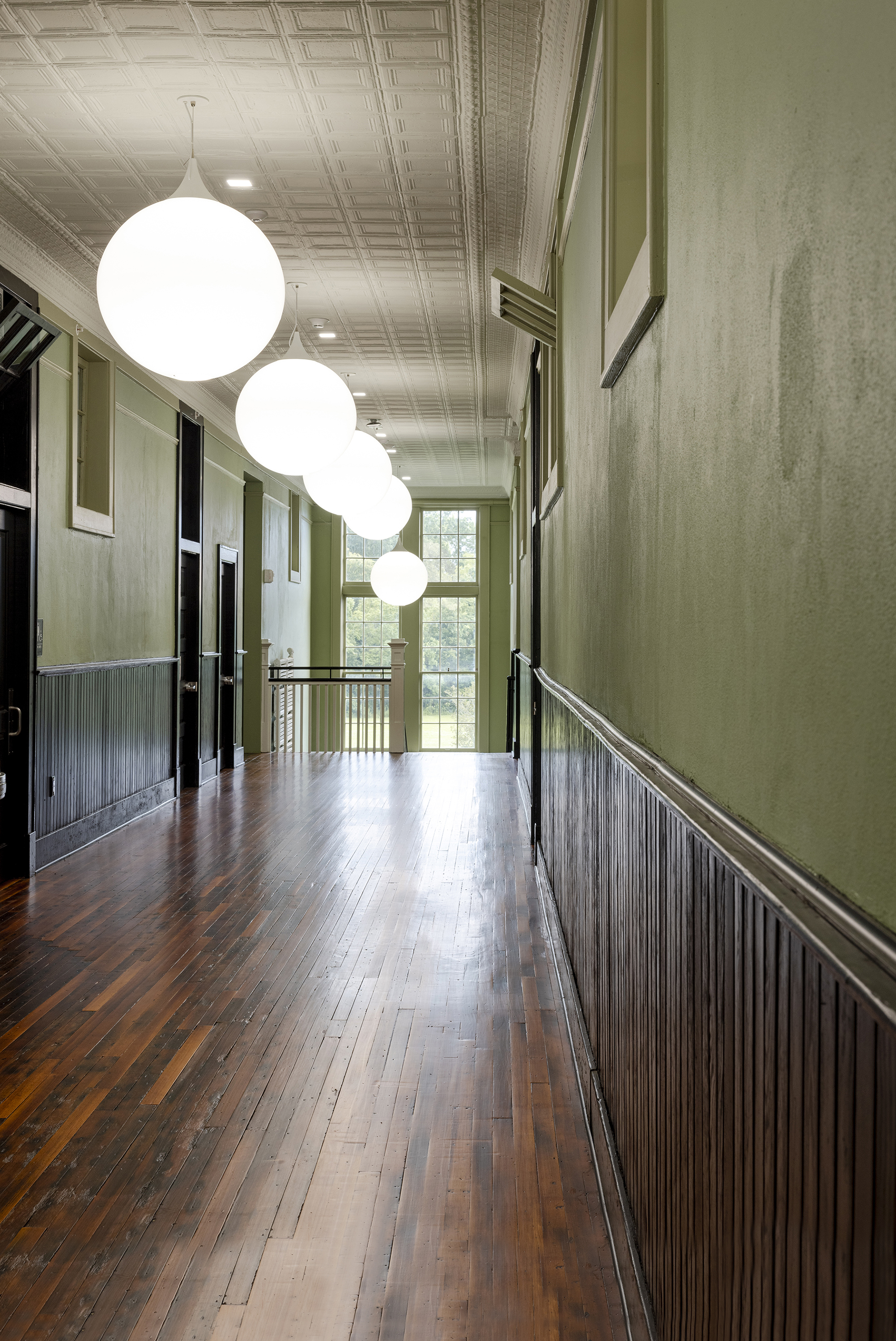
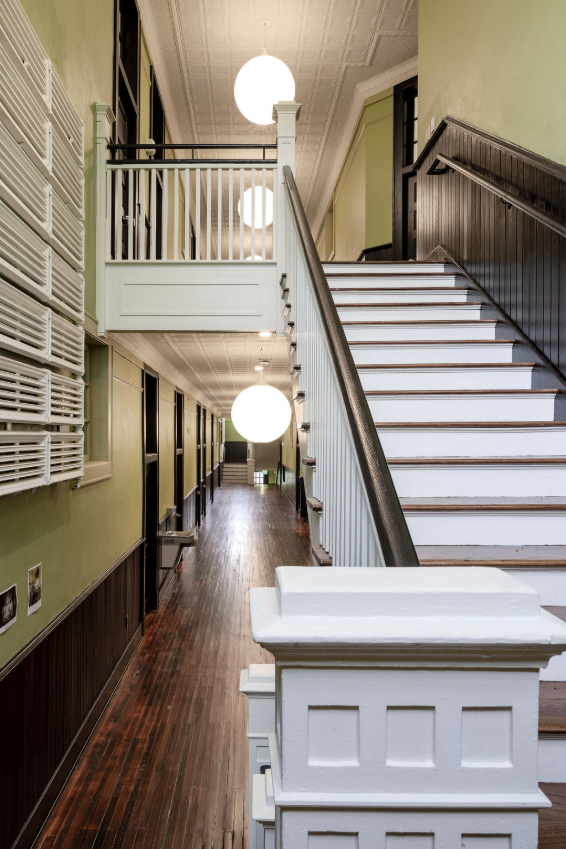
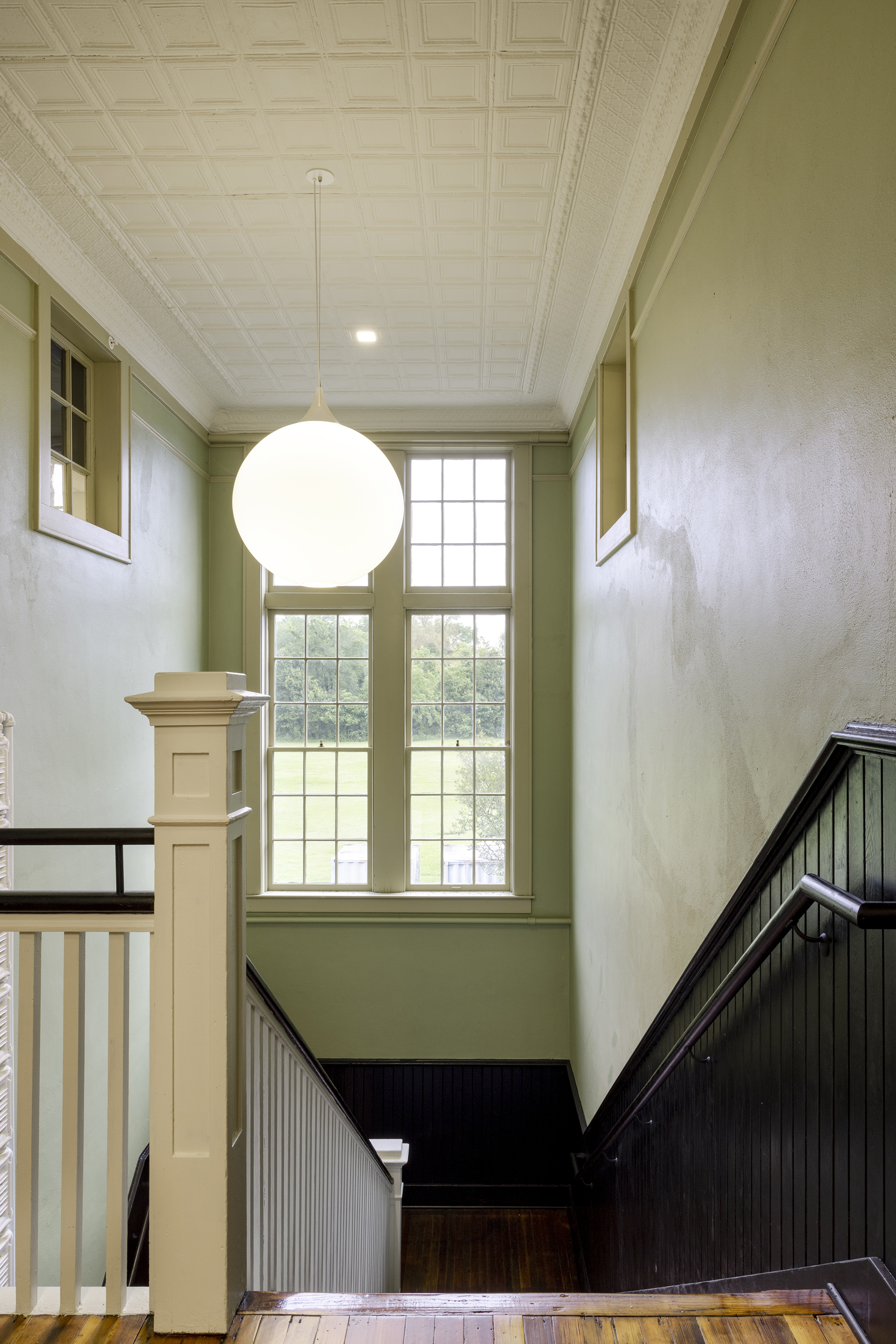
Beneath successive layers of carpet, vinyl tile, and plywood, the original longleaf pine floor of the center hall lay waiting. Revealed and restored, it now reads with the honest patina of nearly a century of use. The original wainscoting was stripped down and restrained in dark finish consistent with the archival investigation. Above, the pressed metal ceiling, a hallmark of the 1920s institutional architecture, was fully restored, reconsolidating from other places in the building. New contemporary lighting was introduced that nods to the past while acknowledging the present movement.
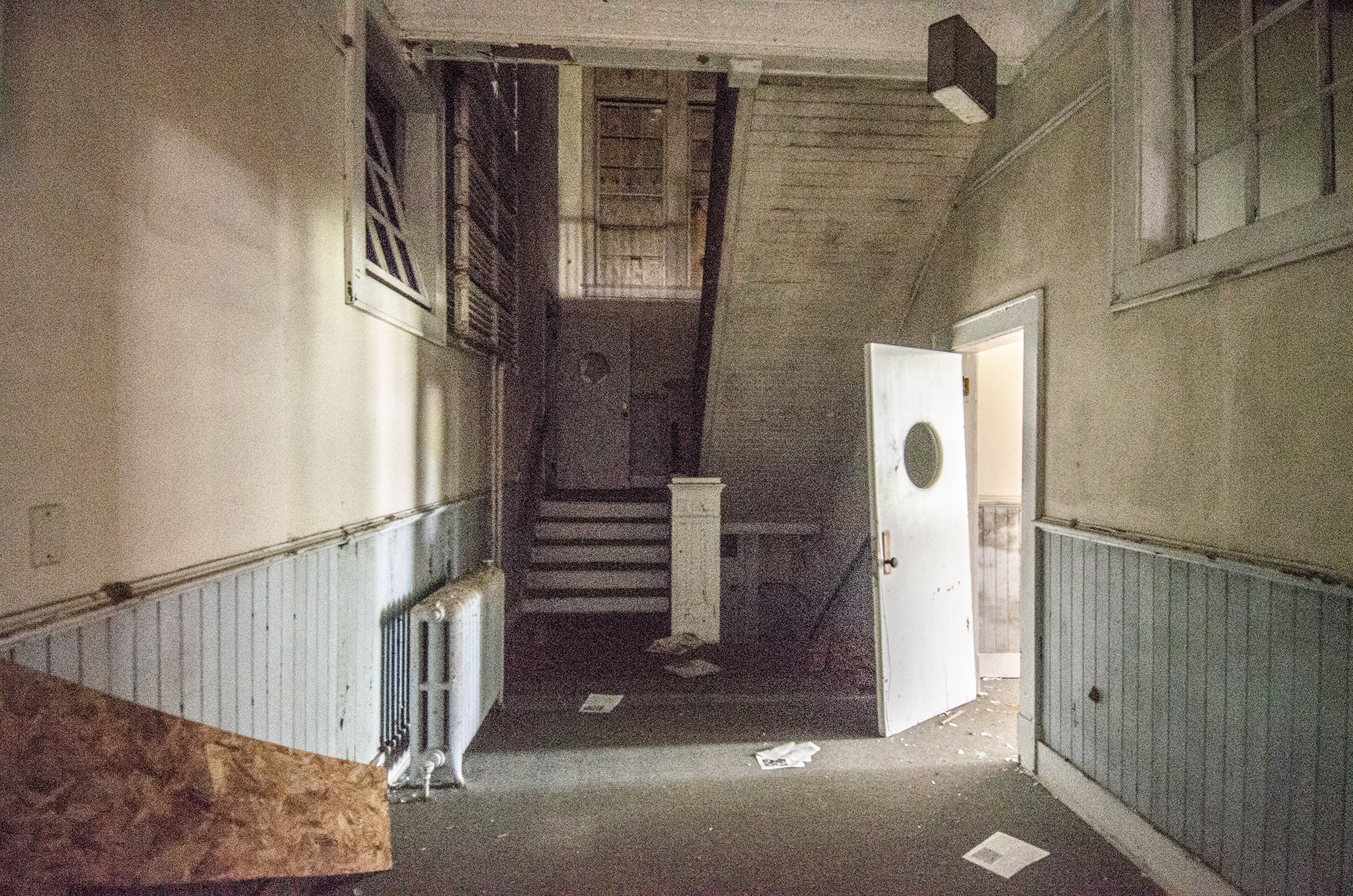
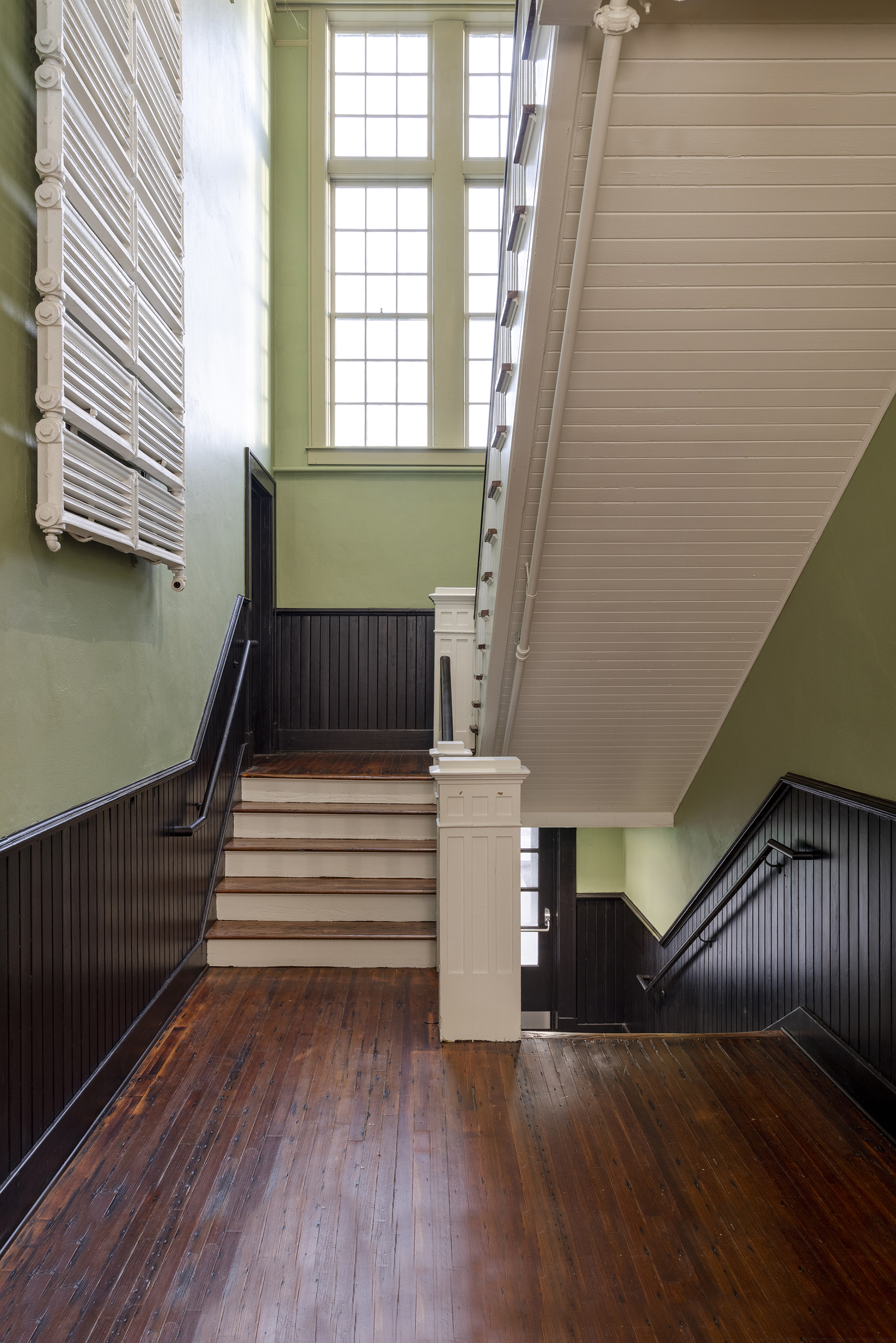
The stairs were carefully restored, with the original newel posts and guardrails preserved in place and handrails were modernized to meet current code. In the double-height space of the stairwell, the original wall furnace was left as an artifact.
Project Text Coming Soon
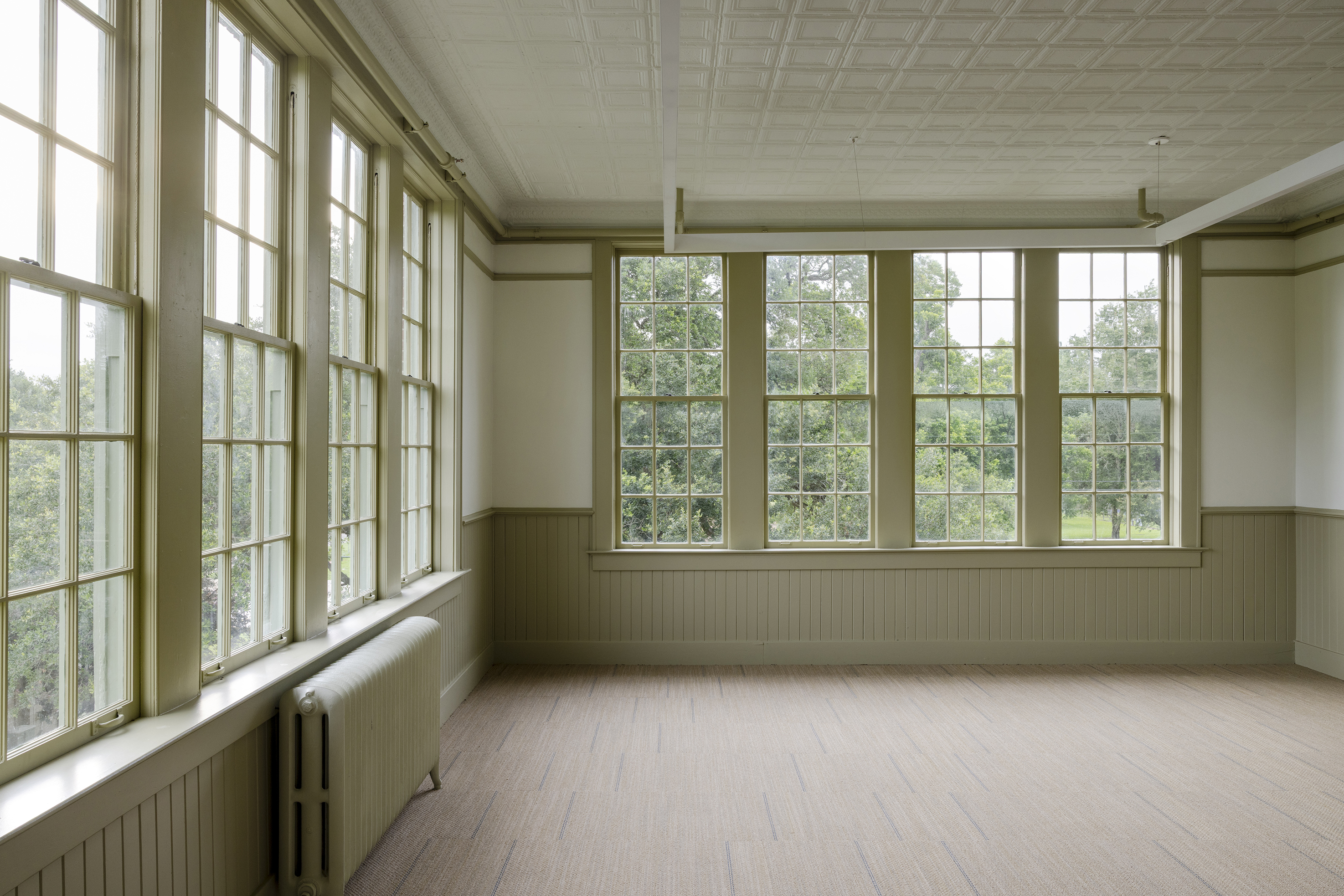
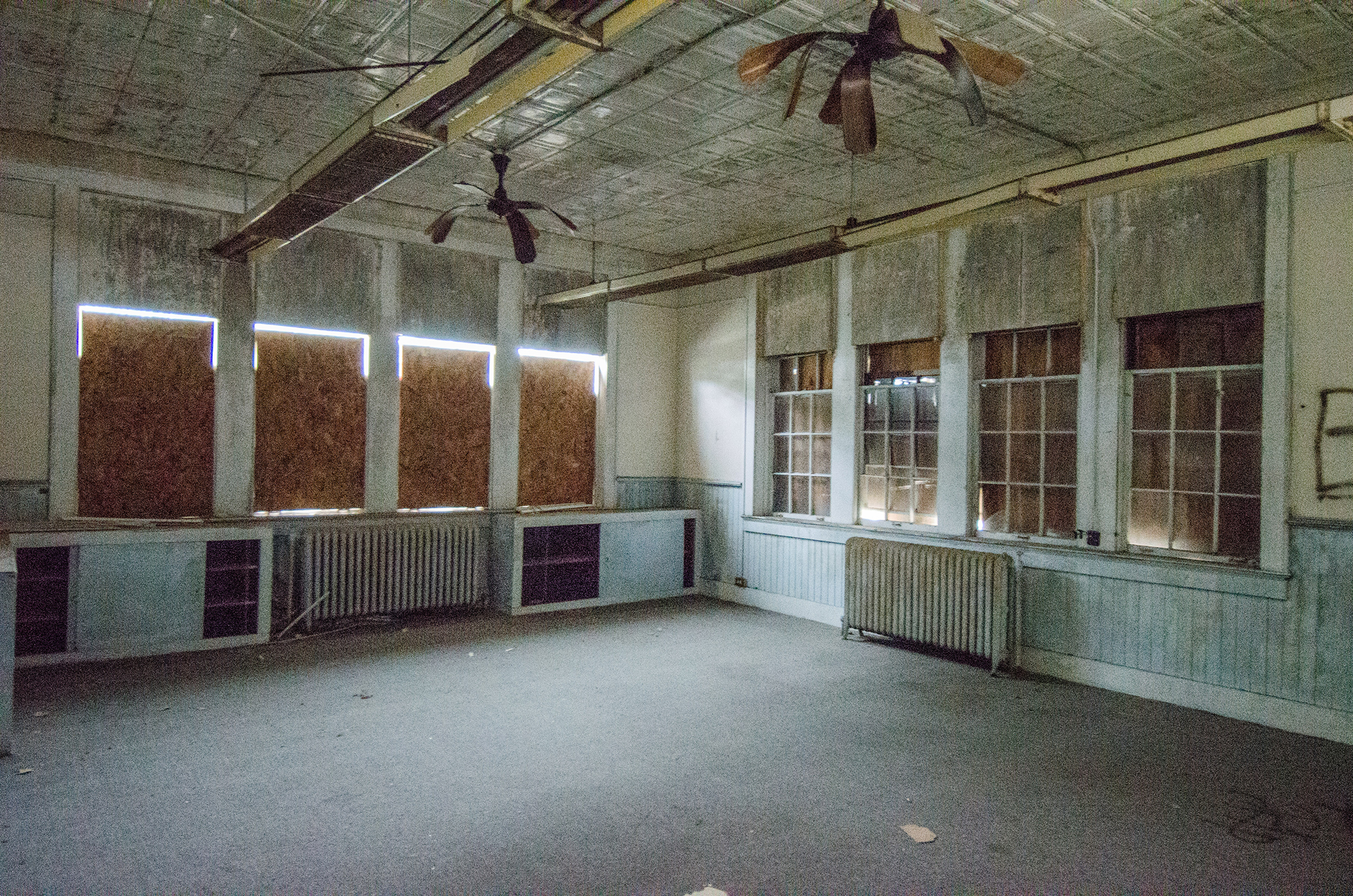
The wainscoting and trim throughout the classrooms were painted in a green drawn from the school’s colors, not a literal match, but a period-appropriate interpretation that would have been at home in a 1920s building. The pressed metal ceilings, restored in the majority of classrooms, are animated by new linear direct-indirect fixtures that wash light upward across the original surface, making the ceiling itself the luminaire. Original heating furnaces were left in place throughout, witnesses to the building’s first life.
The classroom floors presented a practical tension: much of the original wood was reconsolidated into the center hall restoration, and the classroom acoustics demanded something more forgiving than the hard surfaces. The solution was a carpet tile that reads like wood from a distance while its palette of greens, browns, and creams match the greater color palette of the project.
A School at the Center of Its Community — Again
At night, the building announces itself. Lit from the front, the 1926 façade reclaims its presence on the streetscape it defined for generations. New sidewalks extend the campus outward—connecting to a public park with basketball and pickleball courts, to a public library, and to a community center at the rear—returning the school to its original role as a civic heart of the town.
When this building first opened in 1926, the children who walked through its doors spoke French as their native language. They were punished for it here. The language of their homes and their families was something to be corrected, suppressed, and forgotten. Today, ninety percent of the school day at École Saint-Landry is taught in French. The building has come full circle—not just restored, but redeemed.